Monday, August 13, 2012

Paw Preference in Cats

Is Your Cat Left-Pawed?

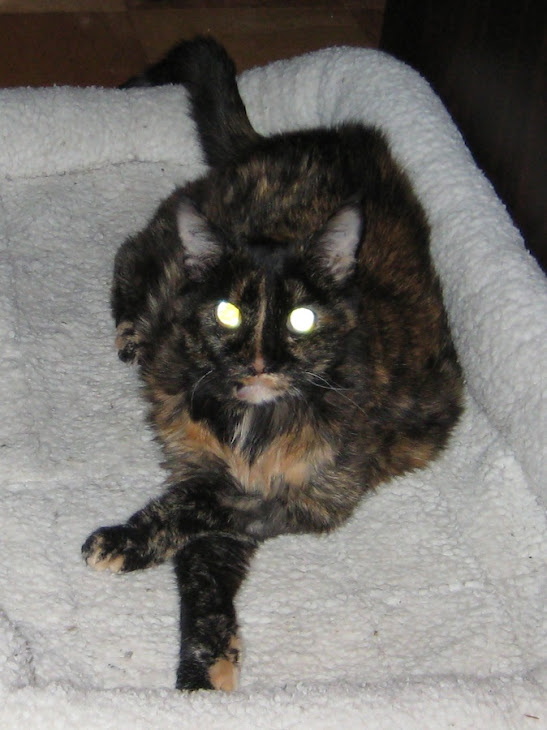
Today is International Left-Handers' Day, which got me to thinking: can cats also be left-pawed?

In fact, they can! In fact, it's estimated that around 40% of all cats show a preference for leading with their left paws. Only 20% are right-pawed, with the remaining 40% being ambidextrous. So of cats who prefer one side or the other, the lefties are in the feline majority!

Researchers at Queen's University Belfast studied 42 cats in 2010 and found that more females were right-pawed than males, and that their preference sometimes shifted between activities. For example, the cats might use one paw for fishing, but lead with another when grabbing a mouse on a string. The complexity of the task given seemed to have an effect, with the dominant paw revealing itself as the task became more difficult. 

Hormones also played a role in the Irish study: cats who were spayed or neutered seemed to lose their preference, becoming more ambidextrous. Intact male cats tended to be left-pawed, while intact females were right-pawed. And female cats exposed to testosterone actually switched to a left paw preference! So perhaps the percentages estimated above are more of a reflection of how many male vs. female cats are altered.

Does it really matter which side your cat prefers? Most of the time, not really. But in an emergency situation, the dominant side will take over and can determine how your cat responds to the threat. While this could make a difference in the wild, it's likely no big deal around the house. If you have a behavior situation where one of your cats attacks another, it could actually come into play.

So how can you tell if your kitty has a preference for one paw over the other? Simple observation. Watch your cat play with a ball or toy to see which paw kitty uses to swat it first. Observe your cat in the litter box to see if kitty digs more with the left or right paw. Dangle a toy and see which paw leads in grabbing it. Place a treat inside a narrow plastic cup or an empty toilet paper roller tube and see which paw kitty uses to reach in and get it. Keep notes, if you like, so you can remember. (That's a necessity for me these days.)

Are there any adaptations you need to make to accommodate your left-pawed kitties, as needs to be done with humans? Well, since cats don't have opposable thumbs, there's no need for left-pawed things like scissors or pens. But if you're constructing a wall climbing system for your cats, it could be that they'll have a preference for climbing from one side or the other, so you may want to make both available. Some placement of hanging toys may need to be shifted a little to give the cats sufficient room to maneuver their dominant side. And if you're addressing that behavior situation mentioned above, you may want to look at where your escape routes are placed.

But if your cat is spayed or neutered, as all pet cats should be, kitty's likely ambidextrous, anyway, so you're probably good!

Old Maid Cat Lady has a wonderful assortment of toys for left- and right-pawed cats.

Tuesday, July 24, 2012

Does Tick Protection Matter for Cats?


There's Deadly Danger For Cats in Ticks!

Most of what we hear about ticks has to do with a dog running through the woods and picking up a tick that brings something like Lyme disease back to their family. And most tick prevention products are bought for dogs.

But there's reason to be wary of ticks on cats, and it comes down to two words: Bobcat Fever.

What is Bobcat Fever?

Caused by a protozoal organism known as Cytauxzoon felis, bobcat fever affects not only our kitties' wild cousins, but can be deadly to our domestic feline companions. A hopeful survival rate for the disease in domestic cats is only 60%.

First discovered in 1976, the disease seems to be spreading from the southern part of the United States into more central and northern states. Unneutered male cats, along with very young cats, those under extreme stress, or with a compromised immune system appear to be most susceptible to infection, although it can strike any cat.

The disease got its name from the wild bobcats that most often carry the organism in their bodies after infection by a tick bite. Oddly, it doesn't typically make bobcats ill, they are mere carriers for the protozoa that cause it. A tick that bites an infected bobcat then passes the protozoa to its offspring, which could number in the thousands. Two types of ticks, the Lone Star Tick (Amblyomma americanumm) and the American Dog Tick (Dermacentor variabilis) transmit it to other cats. Cats cannot transfer bobcat fever to other cats directly; it only spreads by the bite of an infected tick.

The organism that causes the fever reproduces asexually in an infected cat's white blood cells. These protozoal cells then clog tiny blood vessels in the liver, spleen, lungs, and lymph nodes that allow blood to enter the veins and return to the lungs for oxygenation. As the protozoal cells divide and multiply, they attack the cat's red blood cells. At this stage of the disease, signs of the organism can sometimes be seen by viewing a blood sample under a microscope...but not always.

Two different cats may have completely different outcomes when exposed to bobcat fever. While many have died, others survive and may even become carriers for the disease that show no symptoms but will test positively for it and can transmit it to other cats if bitten by a tick. There is no risk of its transmission to humans or any non-feline pets in the household.

What are the Symptoms of Bobcat Fever?


Since domesticated cats are outdoors (where the ticks that carry the fever live) more in spring and summer, the disease tends to show up more in those seasons. Right now is prime time for its appearance. Be alert for these symptoms if your cat goes outdoors into woody areas where ticks may thrive.

A cat may appear completely healthy before suddenly being stricken with bobcat fever. Within 5 to 10 days, or even up to 20 days after the tick bite, your cat may become lethargic and have no appetite. A high fever will be present at first. During this phase of the disease, the protozoa are attacking blood vessels in all the cat's major organs. The mucus membranes may appear pale. Many cats show signs of dehydration.

The cat's liver and kidneys quickly get overwhelmed by trying to process all the damaged blood cells and jaundice appears. You may see labored breathing and a rapid or irregular heartbeat. As the cat approaches death the body temperature drops to below normal level and kitty may vocalize a lot. After much crying in agony, the cat will hemorrhage and die. 

Early symptoms are not unique to bobcat fever, and may be mistakenly diagnosed for other diseases. Mycoplasma haemofelis is a bacterial infection that causes Feline Infectious Anemia (FIA), and produces similar symptoms. It can be transmitted via blood transfusions or from a mother cat to her kittens. Tularemia is also caused by bacteria, usually picked up in wild rodents, but can also be transmitted by ticks, biting flies, and mosquitoes. Both of these are typically treated with an antibiotic. If your cat is mistakenly treated for one of these diseases instead of bobcat fever, by the time the error is discovered the cat will probably already have died. This is how quickly the disease progresses!

Once symptoms of bobcat fever appear, many cats die within 3-6 days. Others linger for up to two weeks before succumbing to it. After death, the protozoa causing the disease also die with the cat, so it is not possible to catch the disease by handling an infected cat's body.

Autopsies performed on cats who died from bobcat fever have shown an enlarged spleen, liver, lymph nodes, and kidneys. There was extensive swelling in the lungs and hemorrhaging from the blood vessels in the lungs. Watery fluid had accumulated around the cat's heart. The mucous membranes surrounding the heart had also hemorrhaged. Evidence of the protozoa causing the disease were found in the poor kitties' spleen, lymph nodes, liver, and bone marrow.

In short, bobcat fever is a horrible way for a kitty to die.

If your cat contracts bobcat fever and survives, that cat should be kept indoors for the remainder of its life to avoid tick bites that could then spread the disease to other cats. If other cats in the home go outdoors and could bring in ticks, make sure to check them frequently for ticks and be alert to the early symptoms of bobcat fever so you can get your cat treated by your vet as soon as possible after infection.

How is Bobcat Fever Treated?

A few different drugs have been used for many years to treat bobcat fever. One is a drug called Imizol (imidocarb diproprionate) that is given by painful injection. The other, called diminazene, is also injected. A third drug called Atropine can help prevent any adverse reactions from the Imizol. But survival rates remain at around 25% with this traditional treatment.

Newer drugs are being used more successfully, however, improving survival rates to 60%. These include the antimalarial drug Mepron (atovaquone), given orally, which stops growth of the protozoa that cause the fever. The antibiotic azithromycin is given in combination with it to prevent any secondary bacterial infection that could complicate the cat's condition. An article just ran in DVM Newsmagazine about this new treatment combination discovered at the University of Missouri in April of 2012.

These drugs are usually combined with IV fluids and heparin to thin the cat's blood by reducing clotting. Treatment time was traditionally two to three weeks, if the cat survived that long. The newer combination is typically administered for about 10 days.

Still...a 60% survival rate means that there's a 40% chance your cat could die if bobcat fever is the diagnosis.

How Cat I Protect My Cat From Bobcat Fever?

Obviously, you'd rather keep your cat from ever getting bobcat fever than try to treat it. The best protection is keeping your cats indoors. This is especially true in the spring and summer months when ticks are most active. And if you've been out in the woods, remove those clothes before entering the house and check yourself for ticks before petting your cats. If your cats do go outside, try to keep them away from wooded areas where ticks tend to thrive.

Never use a tick treatment intended for dogs on cats, as it can be fatal. Fipronyl is one of the few tick treatments approved for use on cats, and even with treatment a cat is not 100% protected from tick bites. And dogs that go outdoors may also bring home an infected tick that can then bite your cats, so make sure everybody's got adequate flea and tick protection.

States where bobcat fever has been reported include Arkansas, Florida, Georgia, Illinois, Kansas, Kentucky, Louisiana, Mississippi, Missouri, North Carolina, Oklahoma, South Carolina, Tennessee, Texas, and Virginia. It has been found in the Florida panther, eastern bobcat, and Texas cougar in the wild and in a white tiger held in captivity. Bobcats as far north as Pennsylvania and North Dakota have been found to be carrying bobcat fever.

Products that can help protect your cat from ticks include:

Whichever method you choose, remember that none are 100% safe, and keeping your cats indoors is the best way to protect them from the horrible bobcat fever.

Click here to shop all of Old Maid Cat Lady's flea and tick products.


Wednesday, July 18, 2012

The Joys of Kitten Parenting

What's Your Favorite Kitten Story?

Several years ago, I found the above little refrigerator magnet that has the little heart you can flip over that says "Fed" on one side and "Not Fed" on the other. Can't say that I've ever used it to remember whether or not the cats have been fed, but it's cute.

Captain seems to enjoy jumping up to bat the little dangly part around, so I've moved it a little lower on the refrigerator so he can stand up and reach it. Naturally, he won't do it any time I have a camera handy, so all you get to see is the magnet on its own. This evening, I'd fed them their canned dinner and then fixed my own dinner. The last time he was playing with it, he'd left the sign on "Not Fed." 

While eating dinner, I heard Captain just batting the heck out of that thing, and when I looked again it was still on "Not Fed."

"Why haven't you changed it?" I joked with him. "You've gotten your dinner."

Then I looked at their crunchy dish, and it was almost empty. So I reached into the crunchy bag, scooped out a cupful and filled it up again. Captain went right over to that thing and batted at it again...and flipped it over to "Fed." Don't tell me that my Golden Boys aren't smart.

Next task: build them an agility course and get them running it!

Thursday, July 12, 2012

Cats and Water: A Good Mix?


Keeping Your Cats Properly Hydrated


This time of year, it's hot pretty much everywhere. One of the best ways to beat the heat is through proper hydration...and that means drinking plenty of water. Most cats may not care for swimming in water, but they should be encouraged to drink lots of it.

Why Hydration is Important in Cats

A cat's body, as are those of most mammals, is composed of 80% water. If that percentage falls by as little as 5%, it can cause a cat to suffer the effects of mild dehydration. If that level drops by 10%, a cat is in severe dehydration and needs veterinary care immediately. Cats that are panting, lethargic, uninterested in any food, have sunken eyes, and an elevated heart rate are likely suffering from dehydration.

You can check your cat for dehydration by pulling up a section of skin near the scruff of the neck, in the shoulder area, and letting it go. If it returns to normal immediately in a normal-weight cat, your cat is properly hydrated. If it slowly returns to normal (a symptom known as "tenting" because it looks like a little tent), kitty needs more fluids. The longer the skin takes to return to normal, the more dehydrated the cat.

Drinking enough water helps keep a cat's electrolytes in balance and its body's cells metabolizing. It lubricates connective tissues, helping relieve the grinding pain of arthritis. It also keeps the cat's urinary tract functioning properly and flushed of impurities, an especially important factor for male kitties. Urinary tract infections are one of the top reasons for feline veterinary visits.

A 2011 study at the University of Aberdeen revealed another benefit of proper hydration: it can help control your cat's weight! In the study, cats were fed exactly the same amount of dry cat food, but those given more water gained weight more slowly than those who drank less. Weight control is important in preventing not only obesity, but also feline diabetes.

So drinking the right amount of water is extremely important to your cat's health.

How Much Water Does Your Cat Need?

In the wild, cats don't drink a lot of water. They get most of their moisture from the blood and bodily fluids in the prey they hunt and eat. (I know...ew!) Our domesticated cats usually eat a combination of dry and canned foods, so they need to drink water to get enough fluids. Those that eat only dry food get less moisture from their food than those eating canned, so they need to drink even more water. A 12-pound adult cat will require about 12 ounces of water a day, or about a cup and a half. If you have a larger breed, like a Maine Coon, kitty should be drinking up to 27 ounces of water daily -- that's more than 3 cups!

Certain illnesses drive an additional need for water. Diabetic cats will drink a lot, as will those with chronic renal (kidney) failure. Cats suffering from cancer, FIV, FeLV, or hyperthyroidism also require more water. So will cats who have experienced a lot of vomiting or diarrhea.

Some chronically ill cats may not even be able to drink enough water to supply their needs, and may need to be given fluids subcutaneously, which you can do at home after instruction by your veterinarian, or even intravenously at your vet's office. I had to give sub-cute fluids regularly to both my first cat and my little Vixen toward the ends of their lives...but that's entirely another story!

Encouraging Sufficient Hydration in Cats

So how do you get your cat to drink more water? Obviously, making clean, fresh water available to your cats is an important first step. But presenting that water in the most attractive manner also helps. Try these 10 tips:

  1. Availability - Make sure your cat has plenty of fresh water available at all times. Seems like a no-brainer but it's something you need to keep an eye on. Some cats drink a lot of water, so make sure those bowls don't go dry.
  2. Cleanliness - A water bowl can get algae growing in it if it's not washed. Make sure to wash your cat's water bowl daily before refilling it with fresh, filtered water.
  3. Praise - Despite the mistaken notion that cats can't be trained, they do respond to positive feedback. I have always tried to praise my cats when they're drinking water, telling them how good they are and how good that water is for them. And they've all been very good water drinkers. The photo above is one of my "Golden Boys" having a nice drink after he came home from his neutering surgery.
  4. Flowing water - A lot of cats enjoy flowing water, whether from a tap or a fountain. This is a carryover from their wild ancestry, as flowing water in nature is less likely to harbor bacteria and if they did drink water, it needed to be from a flowing stream. My little Vixen used to enjoy drinking sideways from a running faucet in the bathroom sink. Many cat fountains are on the market in various designs, and most including a filter to ensure the water's freshness.
  5. Shallow bowl - Cats don't like for their ultra-sensitive whiskers to touch the sides of bowls. There's even a name for this: "whisker distress." They prefer flat or oval-shaped bowls that allow them to drink without touching the sides. This also allows them to observe their surroundings in their peripheral vision, helping them feel more secure.
  6. Temperature - Many cats enjoy a few ice cubes in their water in summer. They'll watch them suspiciously and play with them at first, but once they figure out how much that ice cools the water, they'll be clamoring for their "cubes" and lapping up that cool water.
  7. Positioning - Cats don't like to eat or drink in high-traffic areas. Make sure to put their water dishes in a quiet little alcove somewhere, if at all possible.
  8. Stability - My kittens get a little carried away with their chase-and-play game sometimes and will knock over their water bowl. Then they start playing with the water on the floor, and maybe even drinking a little of it. If you're not around to wipe up the mess and refill a spilled water bowl, it's a good idea to make sure that bowl can't be tipped or swatted over. Large bowls with rubber bases, or perhaps even a place mat underneath the water bowl, can help.
  9. Alternatives - Sometimes placing more than one drinking alternative in different spots around the house can encourage cats to drink more. Place additional bowls or fountains near the places where your cats hang out. You may be surprised to find those that aren't placed right next to their food getting emptied first!
  10. Flavoring - Cats recovering from illness may not want to drink much, so you can make their water more tempting by adding a little juice from tuna or salmon to it.

Cat Drinking Fountain Options


OldMaidCatLady.com has a nice selection of cat drinking fountains. Here's information on them to help you decide which is best for your cats. Click on the link in each to get complete details or to buy it.

Drinkwell was the original cat fountain, invented by a a veterinarian whose cat was always drinking from the kitchen faucet. It's designed with a spout from which the water flows freely for 5 inches, landing on a little ramp below to keep it from splashing in the bowl. There's a charcoal filter for purifying the water, and even a pre-filter to keep shed cat hair from clogging the main filter. We sell it for $54.95.

CleanFlow is our newest addition in the cat fountain lineup. Made by K&H, it has a silent, leak-proof design and won't splash on your floor. Its bowl holds 80 ounces of water, which is constantly circulated through a filter to keep it clean. An available reservoir tank expands its capacity to 170 ounces, and is great for amulti-cat household. Available from $38.95.

Petmate's Fresh Flow fountain sends the water down a little ramp into the bowl. Its ultra-quiet operation won't frighten your cats. Filtration is via a charcoal filter and it has a translucent reservoir that lets you quickly check the water level. It's available in a 50-ounce or a 108-ounce size. $31.95 to $53.95.

The CatMate Fountain has water available on three levels, and running down a ramp to give your cat plenty of drinking options. It has a polymer-carbon filter and operates exceptionally quietly. It has a 10-foot electrical cord, has a dishwasher-safe bowl, and holds up to 70 ounces of water. On sale for $40.95.

The Healthy Pet Water Station has a removable stainless steel bowl, the best material to prevent bacterial growth. It's dishwasher safe and comes with or without the purifying filter. A big difference in this one is that it's a gravity-driven water station that does not need power to operate. Available in three sizes to hold up to 2.5 gallons of water. $20.95 to $33.95.

Our most economical fountains are from Molor Products. They use a standard 2-liter soda bottle as a reservoir and are also gravity-operated. The Standard Version comes in 8 colors, while the Deluxe Version includes a stainless steel bowl. Both are available for under $10 each. And for $11.95, you can even get a non-skid Cat Buffet with water in the middle and a stainless steel food dish on each side.

Whatever your cat's drinking style or your budget, there are plenty of options available to keep all your cats properly hydrated this summer...and all year round!

Friday, July 6, 2012

Have You Added A New Cat Recently?


Introducing a New Cat to Your Home

Shelters have been bursting with cats after a busy kitten season this spring, so many of us are introducing new felines to our household. But how does this affect the existing cats in our homes?

Many years ago, after I'd adopted my first cat from the local Humane Society, he seemed to be suffering from great separation anxiety when I went to work. A lady I worked with had a long-haired tortie she was trying to rehome for much the same reason, so I agreed to take her. She was called Sam, short for Samantha, and she was a beautiful girl.

I'd been told that cats need some time to adjust to each other when first introduced, so I gave them a week or so to work out who was boss, enduring the hissing, "squeaky-door" growls, and such. But while trying to move the new kitty over a bit in the windowsill one day, I felt something under her tail that only became worse upon further inspection: there was poop all matted into her hair because my big boy wasn't even letting the poor thing use the litter box!

That was it; this match was not to be. I had to cut out the poop from her long coat and give Sam a good bath. Then I called my co-worker to let her know it was not going to work out. But I didn't give up on Sam -- in putting out feelers among my network of friends, I found a friend of a friend who wanted her. Within a few weeks, this poor, timid cat who couldn't even relieve herself in my house was the queen of her new household, with a little boy for a companion who loved grooming and doting on her. The friend who had connected us reported that Sam's entire demeanor had changed. I was so happy for her, as she had a home where she could get the attention she craved, without being pushed around by another cat.

When I moved from that apartment a few months later, I'd decided to take in the stray cat I'd been seeing around and take both cats to the new place together, so there would be no invasion of anybody's space. While my boy-kitty also attempted to intimidate her, she was having none of it. She wouldn't hesitate to give him a good swat, claws unsheathed, and he learned quickly to keep his distance from her. That stray turned out to be my beloved little Vixen, my companion for 23 years until her death in April...so there's an introduction that worked out pretty well! They are the two cats pictured above, at the top of this post.


Only one other time did I try introducing another cat to my home, and that was when I'd found a young kitten, probably about 3 months old, at the bottom of the stairs leading to my apartment. He insisted on following me to the parking lot and I was afraid he'd get run over there, so I scooped him up, ran back upstairs, and tossed him in the door, running late for choir rehearsal and unsure of what to expect when I returned.

That kitten seemed to get along fine with the other two, although I did feed him separately. He was a delightful little fellow who found a home with another friend of a friend who just adored him. A recent news article told another story about a couple who weren't as successful in introducing a new cat to their home.

Tips on Successful Cat Introductions

When introducing a new cat to your existing feline companions, there are a few steps you can take that will make it easier.

  • Talk to the cat(s) about it first. I know it sounds crazy, but we're all crazy cat ladies here anyway, right? So before you bring the new cat home, have a mental conversation with your existing cats, talking softly and calmly to them as you do. Tell them what you're going to do, and imagine all the cats curling up or playing together happily and peacefully.  Picture them enjoying abundant food, treats, and snuggles with you, with plenty to go around for all. Using the positive images in your mind is very important in "selling" your cats on the idea that this new introduction is a good thing. When you meet with the new cat, have the same kind of mental conversation, again picturing them together with your cats, happily and harmoniously living together.
  • Introduce the newcomer gradually. Don't just dump both cats together into the house and assume that everything will work out. Cats communicate with body language, but also telepathically and by scent. Put the newcomer in an adjacent room with the door closed between them. Gradually introduce a grooming mitt, T-shirt, collar, harness, bed, or other items from one cat's space into the other's so they can get used to each other's scents. See how they accept one another; are they growling or curious about the other cat hidden behind the door? You may need to do this for a few days, or a few weeks. You may be able to graduate to a screen door or gate in between the two rooms, if needed. The cats' individual personalities will determine the timeframe and progression. And if there are dogs in the mix, that's a whole other dynamic to consider.
  • Add another litter box. Standard wisdom is that you should have as many litter boxes as you have cats, plus one. So adding another cat means adding another litter box. Place them at various spots throughout the house, as the urge may strike when kitty can't get to her favorite box and she may need access to another one. Better to have litter boxes around the house than to find a "surprise" in your favorite shoes!
  • Make sure there are exits. This was a subject tackled on a recent episode of Jackson Galaxy's "My Cat From Hell" show on Animal Planet. The couple he was helping had a cat who constantly attacked the other, cornering her and making her life, well, a living hell! He helped them construct escape routes for the undercat, giving her a way out of the corners so she didn't get beaten up. Harmony was restored! If there are places in your home that are dead ends for one cat fleeing from another, see what you can do to add an exit to them. This could mean a cat tree, or a wall-mounted solution.
  • Let the cats work it out. Although it can be tempting to intervene, and if somebody's actually getting injured you should, give the cats a little time and space to establish their pecking order. You may need to make a few adjustments in where different ones are fed, add some cat furniture you didn't already have, or put a litter box in a new location. But observe their interaction to see what, if any, changes are needed. 
  • Know when to draw the line. Some mixes of cats just don't work, no matter what you do. If you find that all your efforts still don't help the new cat fit into your existing mix, look for a better-matching home for the newcomer. Don't just dump poor kitty at a shelter, as you (or one of your friends) surely know someone for whom that cat would be a good fit. Just like with little Sam, it could be the absolute best situation in the world for that cat.
Adding a new cat takes time and patience. But hang in there. Within a month or two, you should have a happy household, blessed with cats....plural!

Thursday, June 28, 2012

An Up-Close Look at Rabies in Cats


"Could That Cat Have Rabies?"

Summertime brings multiple news reports of rabid cats in communities all over the country. While rabies can occur at any time of the year, there do seem to be more cases in summer.

But how can you tell whether a cat you encounter has rabies? If you care for feral colonies, spend time in wilderness areas, or live in an area where cats tend to roam outdoors, you could come into contact with a rabid cat.

Here are 18 symptoms to look for that would indicate a cat is suffering from rabies, listed more or less in order of progression of the disease:

  • Licking a bite wound. Since rabies is spread by the bite of an infected animal, a cat who has contracted it would have a bite wound. The disease would cause them to constantly lick at this wound. The bite may occur up to a month before more rabies symptoms occur.
  • Flu-like symptoms. The first stages of rabies actually make it difficult to diagnose, as they resemble many upper respiratory infections (URIs) seen in cats. There will likely be fever, although you're not going to get close enough to an unfamiliar cat to take its temperature! This "prodromal" stage of rabies usually only lasts for 1-2 days before it progresses further.
  • Anxiety. The cat may withdraw more than usual or seem jumpier than normal, as though the senses are heightened and everything is startling. The virus is affecting the cat's central nervous system (CNS), causing erratic behavior.
  • Dilated pupils. A side-effect of anxiety, you may notice the cat's pupils appearing abnormally enlarged.
  • Confusion. The cat may look around as though it doesn't recognize its surroundings, other cats, or people who are usually familiar. 
  • Restlessness. As the disease progresses to the "furious" phase, the cat will start to appear even more anxious, unable to keep still for long. Kitty may roam around aimlessly, as though searching for something.
  • Hallucinations. The cat may bite at imaginary things or appear to be watching something in motion that you can't see.
  • Overt aggression. While most feral cats will shy away from humans if escape is possible, one that shows symptoms of aggression when not cornered may be rabid. A cat that is normally quite shy may suddenly become more aggressive, growling at everything and everybody in its vicinity.
  • Lethargy and avoidance. Conversely, a cat that is normally friendly may withdraw or suddenly appear fearful. Whatever the cat's normal demeanor, rabies will reverse it.
  • Seeming "drunk". This indicates more abnormality in kitty's CNS. The cat may walk erratically, stumble, or act odd.
  • Weakness and loss of coordination. This is even worse than the "drunkenness" symptoms listed above, and will progress to paralysis in the final stage of the disease.
  • Eating strange things. Pica is the tendency to eat non-food substances, such as dirt, rocks, or sticks. While many young kittens will put everything in their mouths, just like human babies, if you notice a grown cat doing this, especially if some of these other symptoms are present, the cat may be rabid. Pica on its own, however, may simply be the tendency of some cats and should not be taken as a symptom of rabies if not accompanied by any other symptoms.
  • Seizures. The cat may chew or champ the jaws when not eating, foam at the mouth (the classic rabies image), tremble as though cold, fall over, have jerking motions in the legs, or suddenly urinate and defecate. After seeming a bit out of it for a few moments, the cat may return to a normal state of consciousness, albeit still acting strangely as described in the other symptoms.
  • A dropped jaw. Rabies causes an inability to swallow, so a cat may be drooling and keep the lower jaw dropped to keep from choking on normal saliva production. As the disease progresses, the jaw and throat will become paralyzed.
  • A protruding tongue. In the final stage of the disease, the cat appears thirsty, but is fearful of water if presented with it.
  • A strange meow. As the brain cells and the nerves controlling the larynx become damaged by the disease, the cat may utter an unusual sound. It is not uncommon for cats with dementia to yowl repeatedly. Having never heard the sound a rabid cat makes, I can only imagine that the sound they make would be similar to this, although somewhat compromised by the nerve damage to the larynx.
  • Fear or avoidance of water. Rabies used to be known as "hydrophobia" for this symptom. While many cats tend to dislike being immersed, cats with rabies will become quite agitated around water. This may be due to the paralysis and inability to swallow caused by the disease. Poor kitty recognizes water as a danger of drowning and reacts severely to it.
  • Paralysis. As paralysis reaches the cat's hip area, it may appear to shuffle when walking. When paralysis finally reaches the lungs, the cat can no longer breathe and will die, if an earlier symptom has not already brought about death or the cat has not been euthanized before getting to this stage.
Once symptoms begin, the disease progresses quickly and nothing can be done to save the animal.

How Rabies Affects A Cat's Body


The rabies virus, a member of the Lyssavirus genus of the Rhabdoviridae family of viruses, is transmitted by the bite of an infected animal. Since all mammals are at risk, it can spread rapidly through wild populations of raccoons, foxes, skunks, coyotes, and bats. Fortunately, both humans and cats are less susceptible to the disease than are these wild animals...although neither are immune.

Rabies kills by affecting the grey matter of the brain and the CNS. When the virus first enters the cat's body through the bite wound, it replicates in the muscles around the wound. From there, it spreads to adjacent nerve tissue. It then travels via fluid through all types of nervous fiber, including peripheral, sensory, and motor nerves, to the spinal cord, and from there to the brain. Once there, it begins binding itself to the brain's nerve cells, resulting in the symptoms described above. It also causes acute encephalitis, or swelling of the brain. From there, the virus continues traveling to other organs through the body's nerve cells.

The rabies virus is heavily present in an infected animal's saliva, since this is how it spreads to another animal. However, it does not live long outside a host and being exposed to an infected animal's saliva, blood, or feces by themselves are no guarantee of infection. If an animal has died of rabies and another animal breathes the fumes from its decomposing carcass within 24 hours, there is a possibility (albeit slim) of rabies transmission. There have also been reports of rabies being transmitted by inhalation in a cave where numerous rabid bats were living, but these instances are extremely rare.

Avoiding Rabies

Always fatal once contracted, rabies is completely preventable. Make sure your cat is vaccinated for rabies starting at about 4 months old, with annual boosters required for the vaccine to remain effective. While there are rabies shots available that last up to 3 years, there appears to be a connection between these vaccines and cancerous tumors at the site of injection, so annual boosters are likely healthier for your cat.

Keeping proper records of your cat's vaccination could actually save your kitty in another way. If your cat attacks or bites someone and no proof of rabies vaccination is available, your cat will be euthanized for rabies testing. A definitive diagnosis of rabies can only be made by testing the brain of an animal for the virus during autopsy, so it is necessary to euthanize the animal to do this test. Proof of current rabies vaccination will spare your cat from this fate.

Community, or feral, cats managed in Trap-Neuter-Return (TNR) programs should also be vaccinated while being spayed or neutered. This way, it is known that ear-tipped cats are more likely safe from rabies infection. Many feral cats don't live long lives, so a multi-year rabies vaccine may be sufficient to protect them for life. If you manage colonies of cats, you may also talk to your doctor about receiving a prophylactic rabies vaccine for yourself.

Obviously, if you encounter any animal that appears to be rabid, avoid contact with it. It's always better to keep your distance and observe the animal rather than to try handling it. If you can safely contain and quarantine the animal, do so, but do not put yourself or your own cats in danger. Call your local animal control office so that someone who has the necessary equipment to handle the animal can come out to trap it and hold it in quarantine, or have it euthanized for testing. This is automatically done with a wild animal, but a pet will more likely be quarantined for up to 10 days to observe for additional symptoms first.

If you or your cat come into contact with a rabid animal, immediate action is necessary. People bitten or scratched by a rabid animal need to receive a series of injections to prevent catching the disease. Thoroughly wash the wound for several minutes with soap and water, then get to the doctor. Even if your cat has been vaccinated, if a rabid animal attacks your kitty a booster should be given by your veterinarian as soon as possible after exposure to the disease. Once your cat starts exhibiting the symptoms of rabies, there is no cure for the disease and euthanasia is the only option available.

Rabies is a tragic disease and it is pitiful to see any animal affected by it. Summer is when more cases tend to appear. So it's important to know what symptoms to look for, and to be proactive in protecting yourself and your cats from this terrible virus.

Monday, June 25, 2012

June 24-30 is Animal Abuse Awareness Week


Animal Abuse in 2012

Images like the one above are so hard to look at. But it's important to be aware of the evil in the world that would do harm to such gentle creatures as our feline friends. This poor mother was distraught when presented with her litter of kittens that had been mutilated to death in China. Who could do such a horrible thing to a defenseless animal?

Animal Abuse Statistics

And yet, this type of thing goes on daily all over the world. According to Pet-Abuse.com, cats are second only to dogs in the number of U.S. abuse cases reported, with 3,317 cases of cat abuse reported from 2000-2010. There were 978 convictions involving cat abuse, with another 1,063 alleged and 731 still open. They report the most common types of abuse in all animals as:

  • Neglect/Abandonment (32.2%)
  • Hoarding (12.4%)
  • Shooting (11.3%)
  • Fighting (8.8%)
  • Beating (7.0%)
  • Mutilation/Torture (5.5%)
A few more statistics that may surprise you: the most common age group for animal abuse is 31-40, with the second most common 41-50. Males are more than twice as likely as females to abuse animals. In 2010, the worst three states for animal abuse by type were:

  • beating: New York, California, Florida
  • bestiality: Washington, Georgia, Pennsylvania
  • burning with caustic substance: California, Connecticut, Kentucky
  • burning with fire or fireworks: North Carolina, Pennsylvania, Michigan
  • choking/strangulation/suffocation: California, Florida, New York
  • drowning: California, Florida, New Jersey
  • fighting: Florida, Georgia, California
  • hanging: California, Maryland, Pennsylvania
  • hoarding: New York, Florida, Ohio
  • kicking/stomping: California, New York, Colorado
  • mutilation/torture: California, Texas, Pennsylvania
  • neglect/abandonment: Florida, New York, Texas
  • poisoning: Texas, Virginia, Ohio
  • shooting: Florida, Texas, California
  • stabbing: New York, Florida, Minnesota
  • theft: California, New York, Ohio
  • throwing: New York, New Jersey, Michigan
  • vehicular: Ohio, Texas, Michigan


For animals that were off-leash and unconfined (such as free-roaming cats), over 57% of the cases involved shooting the animals. Another 8.8% were poisoned, while 8.3% were mutilated or tortured. When someone was retaliating against a free-roaming animal they perceived as a nuisance, 73% of the cases involved kicking or stomping the animals.

Of cases involving drugs or alcohol, 22% are cases of hoarding, 18% were neglect or abandonment, 14% beating, 11% shooting, 10% stabbing, 7% throwing, another 7% mutilation & torture, and 6% kicking or stomping.

Now for some really disturbing stats: in cases where the animal was intentionally bound -- that is, where its legs or mouth were tied up by the abuser -- 26% of the cases involved mutilation or torture, 18% involved neglect or abandonment, 11% beating, 7% choking, strangulation, or suffocation, another 7% vehicular injury, and 6% shooting.

So all types of animal abuse are happening all over America. And that's not even getting to many third-world countries where cats are routinely killed for sport, food, or poaching. Yes, it's depressing. But turning away from the ugliness does nothing to stop it.

Preventing Animal Abuse

Fortunately, there are steps we can all take to stop animal abuse. Not everybody can do everything, but if we each do what we can, it will go a long way.
  • Report animal abuse to authorities if you suspect it. This includes incidents of animals left in hot cars, those that are noticeably malnourished, or those left chained outdoors and unprotected in severe weather.
  • Care for a colony of community cats. When managed properly in a Trap-Neuter-Return program, these cats live longer, healthier lives and are less vulnerable to abusers.
  • Keep your cats indoors, or always keep them on a leash or in a secure enclosure if they go outdoors.
  • Spay or neuter your cats to prevent the overpopulation of pets that contributes to the problem of healthy pets being euthanized merely for lack of a home.
  • Teach your children about responsible, loving care of pets. Don't have kids of your own? Speak to them in schools or after-school groups about proper animal care and interaction.
  • Support your local shelter by volunteering or donating supplies or funds. Every shelter is understaffed, underfunded, and needs help in some way.
  • Purchase responsibly, and don't fuel the market for poaching by buying exotic skins, meats, remedies, or products made from endangered or mistreated animals.
  • Advocate on behalf of cats whenever you can. Write letters, speak at public meetings, or help educate your legislators about issues. We have a page of Free Downloads that include brochures on Effective Management of Feral Cats and Humane Euthanasia that you can print as needed to help you.
Did you know that only 47 states consider animal abuse to be a felony crime? Even those that do consider it a felony don't necessarily have lengthy sentencing guidelines for those convicted. And yet statistics have shown that most serial killers began by abusing animals. Intentional abuse of animals is associated with sociopathic behavior. Until this crime is taken seriously and abusers punished appropriately, the cycle of violence will continue.

Yes, animal abuse like that shown above is disturbing to see, and the temptation to turn away from it is great. But only by facing the problem can we stop it. Once awakened, we can no longer turn away.