Thursday, September 27, 2012

Is Your Cat Radioactive?

Your cat may not glow in the dark after
receiving treatment for hyperthyroidism,
but may still be emitting low levels
of radioactivity!

Protecting Your Family From Dangerous Radiation

By far, the most effective treatment for feline hyperthyroidism is radiation treatment with I131, a radioactive form of iodine. It has a 98% success rate in curing the condition. But the treatment has a side effect: cats emitting radioactive iodine through bodily fluids after release!

Hyperthyroidism in Cats

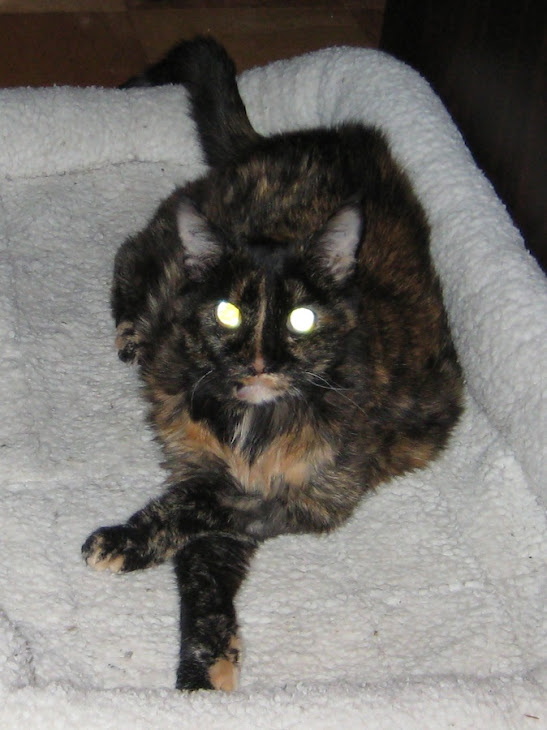
But let's back up a little. The thyroid gland secretes hormones that control the body's metabolism and growth. In older cats, it often starts working overtime. Hyperthyroidism is actually the most common hormone imbalance in cats, mainly affecting those who are 10 years old or more. My own little Vixen suffered from it for the last several years of her life. Symptoms of hyperthyroidism include:

  • Increased activity
  • Increased appetite
  • Increased thirst and urination
  • Increased vocalizing (yowling)
  • Rapid or irregular heart rhythm
  • Weight loss
  • Vomiting and/or diarrhea
  • Unkempt coat or hair loss
Anyone who's lived with a geriatric cat will recognize at least some of these symptoms. Your veterinarian can tell you from lab testing of your cat's blood and urine if hyperthyroidism is causing them. If so, treatment options include lifelong medication (methimazole/thiamazole, which typically runs $600-$900 per year), surgical removal of the thyroid gland, or  I131 treatment. The latter consists of one shot of radioactive iodine, after which your cat will remain in the veterinary hospital for approximately three to five days, during which time you may not visit with him. Both state and federal guidelines regulate this time of hospitalization.

Cats treated with the I131 method often live twice as long as those treated with other methods. One treatment typically cures 85-95% of all cats, and if a second dose is given, it is almost 100% effective in shutting down the hyperthyroidism. The cat experiences no pain with it, and there are practically no side effects. It comes with a high price tag (typically around $1,000), but may be well worth it to you. When left untreated, the symptoms continue to worsen for the rest of the cat's life, resulting in wasting that is pitiful to observe. The earlier treatment is administered, the better the outcome.

The Danger to Your Family

Once your cat is released after I131 treatment, there are special precautions you must take to protect your family from radiation. You may be advised to keep kitty indoors and avoid contact beyond an hour a day for another two to three weeks. You may also be advised to dispose of the cat's litter in a special way for a couple of weeks, and to keep kitty away from small children and pregnant women. This is because the cat will continue emitting radioactive iodine in bodily fluids - urine, feces, saliva, perspiration, and tears. Since a cat grooms and gets saliva all over its body, and perspires through the foot pads, anywhere the cat walks, sits, or lies down during this time can be contaminated with radioactive iodine.

While the amount of radiation being emitted is low, there is still risk, and it's greater for children and pregnant women. Those exposed to it absorb the radiation into their thyroid gland, where it can destroy cells and affect metabolism and growth. Iodine particles can attach to dust particles and even become airborne in your home.

If you find staying away from your cat impossible during this time, you need some way to control the radiation being emitted by kitty's bodily fluids. Luckily, there is now such a product on the market! Laboratory Technologies has developed the Bind-It product that binds with the I131, enclosing it in the solution and enabling you to safely wipe it away. The kit comes with two weeks' worth of hand wash and a spray that both include Bind-It. The spray can be used to decontaminate litter boxes, floors, or almost any other surface where your cat goes.

What About Human Patients?

I131 is also used to treat humans afflicted with hyperthyroidism or thyroid cancer. Because of shortened hospital stays covered by insurance companies, many are sent home sooner in the U.S. than in other countries around the world. If you fear exposing your family (and your cats) to radiation during this time, there's a Bind-It kit for humans, as well! In addition to the liquid soap and spray, it comes with a concentrate that can be used to soak laundry, bed linens and bathroom surfaces like the toilet bowl, sink, and tub.

These days, it seems that dangers are lurking in just about everything we do! But by taking steps to minimize risk from known dangers, we can hopefully protect our families from harm. There's no need to fear the most effective treatment for feline hyperthyroidism if you take the proper precautions.


Tuesday, September 11, 2012

Wordless Wednesday Photo


In Remembrance

Remembering All the 9/11 Victims

Today is 9/11, Patriots' Day, when we remember those who gave their lives in the awful attacks against our nation in 2001. The heroes, as well as the innocent victims.

Much has been written about the dogs who were heroes on that day and in its aftermath. But little attention has been paid to the cats who were innocent victims. Several perished in nearby buildings that also fell with the towers. Some were loved by people who died in the three attacks, perhaps waiting days for rescue by a friend or family member. Others were stranded in their homes for several days without food or water as those who lived near the site of the towers could not return home. And still others, street cats, were left in the dust and ashes of the buildings, frightened and alone, to fend for themselves.

There were no kitty TV news reports to inform these cats about what was going on, but cats have their own ways of communicating and knew something was amiss. They picked up on the fear in the air, and were likely aware of the souls departing this plane of existence. They had to breathe the same choking, dust-filled air from the fall of the towers. Some may have even been aware of their owners' spirits visiting them.

So as you pause this morning to remember the human victims of the 9/11 attacks, think also of the feline victims. Silent, watching, and waiting. They may not have led any rescue teams into fallen buildings, but the events of 9/11 affected them, too.

Monday, September 3, 2012

Cats at Work


Working Cats ... Yes, Really!

Labor Day is the holiday set aside to honor America's workers, so let's take a look at working cats! You may have thought that all cats just lie around napping all the time, but many actually have occupations.

One of the most famous working cats is Matilda, the cat-in-residence at New York's Algonquin Hotel. Matilda doesn't really do much these days other than hang around and greet guests (when she's not napping). Other famous hotel cats include Carmen and Fa-Raon in Nice, France, and Stonehurst Manor, New Hampshire's Bigelow Cats. Does lounging around all day and greeting guests count as work? In the feline world, I'd say so. But let's look for some more active examples of working cats...

There are certainly many celebrity cats from commercials such as Morris, that white Persian in the Fancy Feast commercials, or the adorable white kitten who helped a man propose to his girlfriend. And while cats in movies and TV shows are less common than dogs, many former shelter cats have found a home and a purpose after being rescued for such jobs. (You can find many of these in Old Maid Cat Lady's Video section.) They include Holly Golightly's feline companion "Cat" in Breakfast at Tiffany's,    Tonto of Harry and Tonto, Sassy the Himalayan cat in The Incredible Journey and Homeward Bound, and another famous Himalayan, Jinxie from Ben Stiller's Fockers movie trilogy.

Movie star cats aren't limited to ordinary house cats, either. There was Elsa in Born Free, Baby in Bringing Up Baby, Duma of the eponymous film set in South Africa, and countless wild cats filmed for nature documentaries. Who says having to catch your own dinner isn't work?

You've no doubt heard of Oscar, the nursing home cat who seemed able to predict when someone was about to die. By thus identifying patients in need of more acute palliative care, Oscar helped the nursing home staff to better provide for those patients and notify their loved ones. Increasingly, assisted living facilities and nursing homes are welcoming residents' cats, as they help patients to remain more alert and active, as well as providing comfort.

Therapy cats, who accompany their owners to nursing homes and rehabilitation facilities, have been particularly effective in working with patients afflicted with Alzheimer's and other forms of dementia, as well as with stroke patients and children with developmental disabilities. The cats seem to have a sense for what the patients need from them and provide it without being coached by their human companions.

For thousands of years, most ships have kept cats aboard, and the cats are believed to bring good luck to the vessels they inhabit. The U.S. Naval Institute even has a page devoted to Cats in the Sea Services. Why would ships want cats aboard? Rodent control, naturally. But the cats are also comforting to sailors at sea, providing a reminder of the pets they left back home. And who hasn't found distraction from the tedium of work in the entertaining antics of a playing cat?

In fact, rat-catching seems to be the occupation of most working cats. An organization in Washington state called Puget Sound Working Cats rescues cats and places them in facilities such as warehouses, garages, barns and sheds in need of natural pest control. Saving cats' lives by putting them to work...nice!

Many law enforcement agencies also have an affinity for felines. The police station in Hamilton, Massachusetts had a cat named Eco "on staff" for 11 years. In addition to mousing duties, he offered comfort to crime victims and stressed-out officers. Nobody even minded his napping during meetings! Other cats employed in law enforcement have included Fred of the Brooklyn District Attorney's office; the three-legged Jade of Lumberton, Texas; senior kitty Tizer of the British Transportation police at King's Cross Station in London; Mister Meanor of Lindenhurst, Illinois (who even has his own advice page on the village's website); and the sadly cat-napped Corporal Cuffs of the South Street station house in Philadelphia. Clever namers of cats, those police!

The bodega cats of New York City have been in the news, partially because they're technically illegal, but nobody seems to care about that. They help control rodents in the small grocery stores of the city, and customers enjoy seeing them snooze amongst the merchandise. (Probably doesn't hurt that the customers understand why the cats are there!)

Another famous ratter is Misty, a cat who keeps rats from chewing on wiring in sensitive equipment at a secret Department of Defense installation in the deserts of the American Southwest. Apparently cats are not technically allowed at the facility, but when an outbreak of a hantavirus had people paranoid about the rats that carry the fleas spreading it, the guards got less curious about feline intruders.

Many theaters also employ cats to keep down rodents. Given a rat's tendency to chew on rope, and given that there are many heavy things suspended by ropes above stages, this has likely saved the lives of countless actors and actresses.

Everyone's heard of the cat cafés in Japan; in a country where living spaces are often too small to accommodate pets, people get their cat fix by visiting these facilities with cats on staff to ignore or play with the guests. From the link above, it sounds like some of these cats "work" harder than others.

Many other types of stores have shop cats. They seem to be especially popular in bookstores, as literary types and cats seem to have a natural affinity for each other. Some may be mousers, while others are just there to keep the shop owners company and greet guests. Some become local celebrities.

Another local celebrity cat who's also found a following online is Joey the Garden Cat. He took up residence in a local TV news organization's garden and has become their official mascot. When Joey developed a tumor on one of his legs, thousands followed his recovery and sent him well wishes and gifts. And you'll occasionally see him wandering on-set during the news show!

Maru is a Japanese cat who's become famous just for being a cute cat, mainly from his caretaker's videos posted online. Billed as the "world's most famous cat," Maru has videos that get millions of views! You may have also seen Prin and Koutaro, the very patient Scottish Fold cats who live with Japanese cat clothing designer Takako Iwasa, operator of Cat Prin: The Tailor of a Cat. One wonders how many injuries Takako incurred while getting them accustomed to being her models. There's even a book of Iwasa's cat fashions now available!

Anyone who has a cat knows how they love to scratch things like furniture, draperies and carpet, so it was probably a natural career choice for Henry the Feline Fiber Artist of Bangor, Maine. The difference in Henry's work and that of most cats is that his fiber art pieces have actually been shown on exhibit! He's also been interviewed on blogs.

Some veterinarians' offices have donor cats who donate blood to cats undergoing surgery. Often, they were homeless cats who found a home there. Some may have been patients whose owners died and the family didn't want them, or whose owners moved away and were unable to take their cats. Most of the time, these cats just hang out around the office, greeting patients and getting spoiled by the staff.

There are also animal blood banks -- surprised? -- and cats donate feline blood there. These cats live at the facility for a year and are kept healthy and well fed, then are available for adoption. None of them are ever euthanized, although if they were not taken into the blood bank programs, they could easily have suffered that fate. But with only four such facilities in the entire United States, some vets do rely on resident donor cats at times.

Still think cats are lazy? Think again -- there are even websites devoted to working cats! One is called Shopcats and another is a page on Purr-n-Fur in the UK. You can submit stories and photos of working cats you know to be posted on the sites.

Bet you're taking another look at Fluffy and wondering how you can put her to work, huh? Happy Labor Day to all cats -- working and nonworking -- and to you, the staff who labor year-round to keep those kitties happy!

Saturday, August 18, 2012

It's National Take Your Cat to the Vet Week!

Is Your Cat Due For a Checkup?

August 18-24 is National Take Your Cat to the Vet Week, according to Petfinder. While they don't expect every cat owner to get into the vet's office this week, they are reminding people to schedule a well-cat visit for a checkup. Cats should visit the veterinarian once a year, or every six months for senior cats. Yet cats only see their vets about half as often as do dogs.

A lot of us have been experiencing tight budgets, and it's easy to put off "luxuries" like veterinary care for your cats in tough times, especially when we can find so much information about cat health online. But caring properly for your furry family members is not really a luxury. And it can actually save you money in the long run by identifying health problems before they get to a critical stage.

Why endure the hassle of taking kitty to the vet when nothing's wrong? Because cats are masters at masking symptoms of illness. It's a survival tactic in the wild. So by the time kitty actually shows symptoms of an illness, the disease or condition has often progressed to the point that it's much harder (and more expensive) to treat. During a well-cat visit, your vet will give kitty a nose-to-tail checkup that can identify things like obesity that could lead to diabetes, parasites, irregular heart rhythm that could indicate cardiovascular disease, unusual growths that could be tumors, or tooth and gum disease that could damage kitty's major organs. If your vet sees your cat regularly, something that's out of the norm can more easily be identified.

Then there's the issue of vaccinations. We all know the importance of an annual rabies vaccine that is actually required by law in most places, but there are several other recommended vaccines that can spare your cat from fatal feline diseases. These include feline distemper, upper respiratory infections, and feline leukemia.

Lab work on your cat is also a good idea. This includes tests on kitty's blood, urine, and fecal matter that can identify abnormalities that may mean disease. Typical blood tests include a Complete Blood Count (CBC) that can indicate anemia, leukemia, parasites, or other infections. A blood chemistry test makes sure the levels of minerals and electrolytes in your cat's system are at the optimal levels. Urinalysis checks for things like protein, sugar, or blood cells in the urine, all of which could indicate diseases. And the fecal smear will tell whether your cat has any digestive parasites like tapeworms.

When preparing for your cat's veterinary visit, make a list of any issues you may want to discuss with the doctor. These could include changes in eating or drinking habits, litter box avoidance, unusual weight gain or loss, or any unusual behaviors you've noticed that are not normal for your cat. These can alert your vet to possible health issues for which further testing can be done. A cat who's stopped grooming may be having arthritis pain that makes it painful. Peeing in your shoes is not usually because the cat's "mad" with you, it's your cat trying to tell you that it hurts when he pees. Now's the time to ask and find a solution.

Your vet is also a good source of the latest products to protect your cat from fleas, ticks, and heartworms. While we do carry some flea and tick preventatives on Old Maid Cat Lady, there are many options available for which we don't yet have a supplier, so if you can't find what you need on our site, your vet probably has it.

And what about getting kitty into the carrier and the wounds you will undoubtedly incur as a result? Getting your cats used to going places in a carrier when they're young will help, and making sure those places aren't always places poking and prodding them is even better! Many cats don't care for being moved when they're not the ones in control of the motion, so car rides are on their no-no list. But increasingly, cats are being taken for rides in strollers and sitting in car booster seats that used to be reserved for dogs. If you have to make a quick run to the bank drive-through and are coming right back home, why not take the cats with you? They may even get a treat, and the tellers will enjoy seeing them. Make sure they're in harnesses and strapped in securely, for their protection, but nothing's wrong with getting cats used to car rides.

So no more excuses! Get those kitties' vet appointments scheduled this week!

Keep your cats healthy in between vet visits with products from Old Maid Cat Lady's Health Time section. If you use a holistic veterinarian, you'll find many of their recommendations in this section of the site. There are even some lists of the most common ailments afflicting cats, and lots of educational material in some of the categories of health products.

Friday, August 17, 2012

Another Black Cat Story

It's Black Cat Appreciation Day!

I've already commented on Facebook and Twitter today that my first cat was a black cat, and posted a photo of him drinking from a bird bath in my back yard. But he wasn't the only black cat to come into my life.

One chilly winter evening when I lived in my fabulous apartment on the river, I heard a cat meowing at top volume outside my front door. Opening it, I found a large black tomcat -- obviously a tomcat -- who was very talkative and friendly. I petted him a little and went in to get him a little of my cats' dry food, which he gobbled up hungrily.

"He's probably also thirsty," I reasoned, bringing him a dish of clean water. "And it's going to get awfully cold tonight; he needs a warm place to sleep."

Not knowing if he'd had his shots, I was hesitant to take him into my apartment with my two. So I found a cardboard box where the top had been cut around three sides instead of across the middle, making a sort of flap that hung all the way down. There was also a wool blanket I'd "inherited" from a friend moving overseas, and I put that inside the box to keep out the chill, placing the contraption next to my front door.

In the morning, I figured it might be a good idea to move the box from right by my door, to avoid arousing the ire of my next-door neighbor whose door was right next to mine. So I went to pick up the box and move it to the other side of the front balcony, where it would be next to some sliding glass doors on the front of my apartment, and not next to anyone else's front door.

But the box was unusually heavy, and sure enough, "Clarence" (as I'd taken to calling him) came running out of it! Pleased that he'd figured out the setup, I got him some more crunchies for breakfast and made sure he knew where I was moving his box so he could get in it later on when the temperature dropped again. That box stayed there for the rest of the winter, with Clarence using it for a warm refuge whenever he needed it.

Spring came and I didn't see Clarence around any more, so I figured he'd moved on, not wanting to imagine the alternative. But early the next fall, when it's still pretty hot here in Florida, I heard loud meowing outside my front door and opened it to find Clarence calling me outside! He was sporting a red collar someone had put on him and appeared to be happy and well fed...at least he didn't even touch the handful of crunchies I brought him to eat.

I petted and fussed over Clarence and told him how happy I was to see him. He hadn't come to eat, just to thank me for taking care of him when he'd needed it, and to let me know that he'd found a home with someone who had stepped into that caretaker role full time for him. When he left, I never did see him again.

If you've never loved a black cat, you've truly missed out! And yet black cats are the least likely to get adopted at shelters. It's something I've never understood; they've so sleek and beautiful, like a miniature panther living in your house!

Adopting a black cat today, on Black Cat Appreciation Day? If so, here are several popular names for black cats:
  • Blackie
  • Smoky
  • Shadow
  • Midnight
  • Inky
  • Magic
  • Noir (French for "black")
  • Nuit (French for "night")
  • Ciara (Irish for "black")
  • Jack
  • Lucky
  • Ebony
  • Spade
  • Ninja
  • Panther
  • Onyx
  • Eclipse
  • Coffee
  • Velvet
  • Coal
  • Ace
I once knew a lady who had a black cat named Albert, and the most interesting black cat name I've found was "Yeehaw" which is close to the pronunciation of the Gaelic word for night, Oíche, ("ee-ha"). But whatever you name your black cat, here's wishing you a long and happy life together!

Monday, August 13, 2012

Paw Preference in Cats

Is Your Cat Left-Pawed?

Today is International Left-Handers' Day, which got me to thinking: can cats also be left-pawed?

In fact, they can! In fact, it's estimated that around 40% of all cats show a preference for leading with their left paws. Only 20% are right-pawed, with the remaining 40% being ambidextrous. So of cats who prefer one side or the other, the lefties are in the feline majority!

Researchers at Queen's University Belfast studied 42 cats in 2010 and found that more females were right-pawed than males, and that their preference sometimes shifted between activities. For example, the cats might use one paw for fishing, but lead with another when grabbing a mouse on a string. The complexity of the task given seemed to have an effect, with the dominant paw revealing itself as the task became more difficult. 

Hormones also played a role in the Irish study: cats who were spayed or neutered seemed to lose their preference, becoming more ambidextrous. Intact male cats tended to be left-pawed, while intact females were right-pawed. And female cats exposed to testosterone actually switched to a left paw preference! So perhaps the percentages estimated above are more of a reflection of how many male vs. female cats are altered.

Does it really matter which side your cat prefers? Most of the time, not really. But in an emergency situation, the dominant side will take over and can determine how your cat responds to the threat. While this could make a difference in the wild, it's likely no big deal around the house. If you have a behavior situation where one of your cats attacks another, it could actually come into play.

So how can you tell if your kitty has a preference for one paw over the other? Simple observation. Watch your cat play with a ball or toy to see which paw kitty uses to swat it first. Observe your cat in the litter box to see if kitty digs more with the left or right paw. Dangle a toy and see which paw leads in grabbing it. Place a treat inside a narrow plastic cup or an empty toilet paper roller tube and see which paw kitty uses to reach in and get it. Keep notes, if you like, so you can remember. (That's a necessity for me these days.)

Are there any adaptations you need to make to accommodate your left-pawed kitties, as needs to be done with humans? Well, since cats don't have opposable thumbs, there's no need for left-pawed things like scissors or pens. But if you're constructing a wall climbing system for your cats, it could be that they'll have a preference for climbing from one side or the other, so you may want to make both available. Some placement of hanging toys may need to be shifted a little to give the cats sufficient room to maneuver their dominant side. And if you're addressing that behavior situation mentioned above, you may want to look at where your escape routes are placed.

But if your cat is spayed or neutered, as all pet cats should be, kitty's likely ambidextrous, anyway, so you're probably good!

Old Maid Cat Lady has a wonderful assortment of toys for left- and right-pawed cats.